

Why Dual Manufacturing Matters in Today’s Global Supply Chain


Did You Know? Dual Manufacturing in the U.S. and Mexico Reduces Tariff Risk
Based on Industry Insights from Dennis Johnson, Billy Glass, Keyon Keshtgar, Julio Marquez, Abraham Aldaco and Jose Nava
Tariffs have become one of the most unpredictable variables in global manufacturing.
For OEMs, sudden shifts in trade policy can disrupt supply chains, increase costs, and force last-minute sourcing decisions. While many companies try to react to tariffs after they happen, a more effective strategy is to design flexibility into your manufacturing footprint from the start.
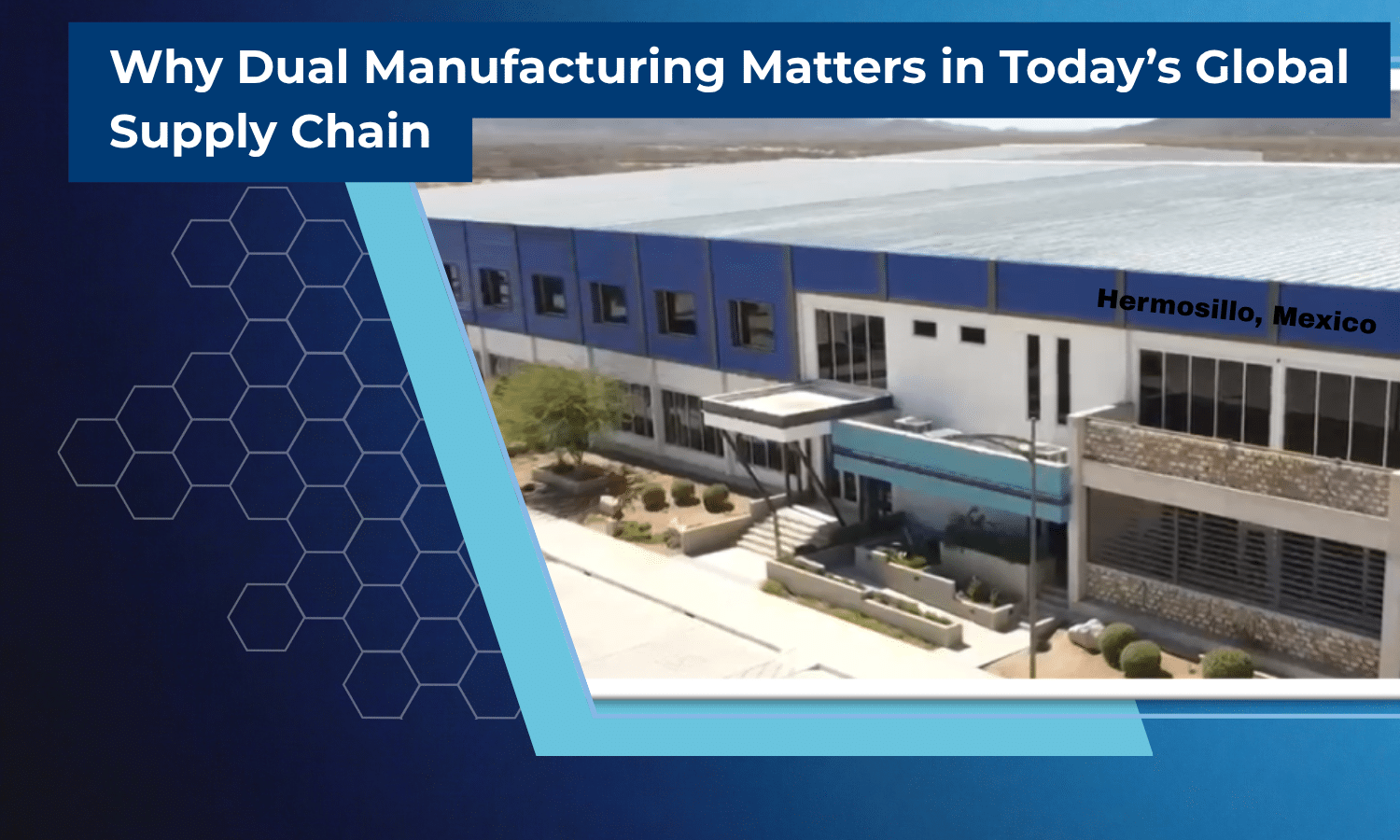
One of the most practical ways to do that is through dual manufacturing capabilities across multiple countries. In this case we will look at California, USA and Hermosillo, Mexico.
At Onanon, with facilities in Milpitas, California and Hermosillo, Mexico, this approach provides a strategic advantage that helps OEMs stay competitive, compliant, and cost-efficient.
Why Tariffs Create Challenges for OEMs
Tariffs can impact manufacturing in several ways:
-
Sudden cost increases on imported components
-
Disruption of established supply chains
-
Reduced margin predictability
-
Pressure to relocate production quickly
-
Increased administrative and compliance burden
For companies relying on a single-region manufacturing strategy, these changes can be difficult to absorb.
Flexibility is no longer optional. It is a requirement.
The Advantage of a Dual Manufacturing Strategy
Operating manufacturing facilities in both the U.S. and Mexico creates built-in supply chain agility.
Instead of reacting to tariffs, OEMs can proactively adjust production strategies based on:
-
Cost structure changes
-
Trade policy shifts
-
Lead time requirements
-
Logistics considerations
This dual-location approach allows manufacturers to shift production between regions without compromising quality or delivery timelines.
Milpitas, California: Engineering and Proximity
The Milpitas facility provides key advantages for OEMs that require:
-
Close collaboration with engineering teams
-
Rapid prototyping and design iteration
-
High-mix, lower-volume production
-
Tight integration with Silicon Valley innovation ecosystems
For early-stage development and complex assemblies, proximity to engineering resources reduces development cycles and improves communication.

Hermosillo, Mexico: Scalable, Cost-Effective Production
The Hermosillo facility enables efficient scaling for production programs.
Key benefits include:
-
Competitive labor cost structure
-
High-volume manufacturing capability
-
Proximity to U.S. markets
-
Reduced logistics complexity compared to offshore production
-
Alignment with North American trade frameworks
For OEMs transitioning from prototype to production, this provides a clear path to scale without changing suppliers.
Navigating Tariffs with Nearshore Manufacturing
Manufacturing in Mexico offers a significant advantage in today’s tariff environment.
Compared to overseas production, nearshoring allows:
-
Reduced exposure to overseas tariffs
-
Shorter and more predictable supply chains
-
Faster response to market demand
-
Lower shipping costs and transit times
-
Simplified import/export processes within North America
This makes Mexico an increasingly strategic location for OEMs looking to balance cost and risk.
Maintaining Quality Across Locations
A common concern with multi-site manufacturing is consistency.
At Onanon, both facilities operate under aligned processes, quality systems, and engineering standards. This ensures:
-
Consistent product quality
-
Seamless production transfer between sites
-
Unified documentation and testing protocols
-
Predictable performance across all volumes
For OEMs, this means flexibility without compromise.
Supporting the Full Product Lifecycle
The combination of Milpitas and Hermosillo supports every stage of the product lifecycle:
-
Concept and design collaboration
-
Prototyping and validation
-
Pilot builds
-
Full-scale production
-
Ongoing manufacturing support
This end-to-end capability allows OEMs to scale efficiently while maintaining continuity throughout development and production.
Why Dual Manufacturing Matters More Than Ever
In today’s environment, supply chain resilience is a competitive advantage.
OEMs that rely on a single manufacturing location are more vulnerable to:
-
Tariff changes
-
Geopolitical shifts
-
Logistics disruptions
-
Cost volatility
A dual manufacturing strategy provides:
-
Flexibility
-
Risk mitigation
-
Cost control
-
Faster response to change
It transforms manufacturing from a fixed constraint into a strategic asset.

Building a Resilient Manufacturing Strategy
If you are evaluating how tariffs and global supply chain shifts may impact your product, now is the time to consider a more flexible manufacturing model.
With integrated facilities in the U.S. and Mexico, Onanon helps OEMs:
-
Reduce tariff exposure
-
Scale production efficiently
-
Maintain quality across regions
-
Adapt quickly to changing market conditions
Visit Onanon.com to learn more or connect with our team to explore how dual manufacturing can support your next program.


